Tuesday, May 30, 2006

MEMS and Nanotech in Medicine

In initiating our report on "Micro- and Nanomedicine", which details the full spectrum of products, technologies and markets in the application of MEMS and nanotech to medical use, I elected not to approach this as an update of the report we did in 2003, for several reasons. First, I was able to draw on very qualified resources for the current report, and was particularly interested in the analysis capitalizing on this by having an "unbiased" view of the market. Second, the market continues to be driven heavily by R&D, which by its nature results in a rapid flux in the players, the nature of their nanotech/MEMS initiatives and the actual status of development.

Since our prior analysis, a very great deal has changed in the fields defined by those corporate, academic and government entities pursuing medical development of nanotech and MEMS. We currently profile about a 100 companies, but there are easily 4-fold more that one might consider for profiles given the number of companies and their current or potential involement in micromedicine or nanomedicine.

Tags: , , ,

Friday, May 19, 2006

Unnecessary Surgery and Throwing the Baby Out with the Bathwater

Here's another reference from BusinessWeek today, "Bypass that Operation", on the same vein about doctors who don't know what they are doing, including performing unnecessary surgery.   It suggests that many if not most of 400,000 bypass surgeries and 1 million angioplasties are unnecessary. 


While I find fault with the general tone of this article, glorifying Dr. David Eddy, his brilliance and his blunt challenge to healthcare that it needs better proof for the efficacy of its treatments, because the tone of this article blithely understates the fact that there is a clinical basis for the decisions doctors make, some patients actually do get better by the treatments prescribed, and wholesale dismissal of physicians' education and training may have less to do with the facts than it does with Dr. Eddy's ego and BusinessWeek's need to make brash statements to gain attention.  This is not to say that I do not believe there are flaws in the process, but there is little justification for the kind of criticism that the BW article. What bothers me most about this article is that its sensationalistic approach to the subject and its flippant consideration of clinical practice on a grand scale trivializes the benefits of medicine and medical technology to patients.


By the way, in 2003, I was diagnosed with coronary artery disease, with blockage at 90% in one artery. While Dr. Eddy may thrive on the debate challenging the value of angioplasty and stenting ("mesh tubes" are not angioplasty, BusinessWeek), I know that however true it may be that some "cheaper alternative" might have done as well as angioplasty/stenting, there was no such alternative at the time. I am alive now. Replicate my experience with all others similarly diagnosed and that is precisely the reason for the high utilization of angioplasty/stenting. BusinessWeek's cursory analysis failed to consider such an obvious driver.


Tags: , , ,


"Medical Guesswork" Exposing the Ugly Truth

I have always had a rather sanguine understanding of medicine, having been sensitized to its practical limitations for most of my life. Having been the son of a general surgeon and the nephew of a pediatrician, I saw many aspects of medicine that have tempered my thinking about treatment alternatives in the medical device industry. For this reason, when I came across the article in the May 29, 2006, issue of BusinessWeek Online, asserting that healthcare professionals really know little about which treatments actually work, I found agreement with the idea, and in some cases strongly so, but in other cases I felt the premise misses a few big boats.


From BusinessWeek: "The problem is that we don't know what we are doing," says Dr. David Eddy (the"mathematician and health-care economist" who coined the term "evidence-based medicine"), arguing that, bluntly, there isn't very much of this in healthcare today. Further, according to BusinessWeek, "even today, with a high-tech health-care system that costs the nation $2 trillion a year, there is little or no evidence that many widely used treatments and procedures actually work better than various cheaper alternatives."


The point at which I agree with this is that physicians have always been given wide latitude in determining therapeutic choices, by virtue of their education, their consideration of many different variables affecting patient condition and the suitability of any given treatment. What drives the physician's decision-making is the availability of a reimbursible therapeutic option that specifically addresses the clinical problem to address the medium term need of the patient. By "medium term" I mean the need to solve the problem now, get the patient back on their feet and keep them that way not in any permament sense, but in a medium term sense. Does any cardiothoracic surgery think CABG is a permenent solution? Perhaps long term, but not permanent. Does any interventional cardiologist believe even a drug-eluting coronary stent is a permanent solution? Perhaps more likely to be permanent than bare stents or angioplasty alone, but certainly not permanent. So, doctors are applying the available therapeutic option for the longest solution that is viable. There are many stakeholders interested in the more expensive option -- medical product manufacturers, physicians, even patients (who want the high-tech quick-fix). There are not many stakeholders advocating for cheaper options -- perhaps HMO's --- but who is listening to them?


However, medical devices and drugs are already aggressively evaluated for their efficacy against controls, so the premise of this article, however well-founded, overstates the case when it comes to the use of medical products. The upshot of this article otherwise is to suggest that the upward spiraling U.S. healthcare costs are attributable to expensive treatments alone, when indeed the focus should be on clinical decisions themselves. Physicians are the ones who have been given the latitude to apply them or not, and until they have a different incentive system or until the evidence is much stronger for alternative treatments, absolutely nothing will change.

Tags: , , , , ,


Wednesday, May 17, 2006

Endoscopic GERD Treatment

Market shares for key players supplying GERD devices in the U.S. are shown in the chart at right.

Gastroesophageal reflux disease (GERD) is a growing problem affecting approximately 5% of the population. An estimated $10 billion is spent on GERD in the United States each year. It is primarily treated with medical therapies (e.g., proton pump inhibitors, or PPIs) for the majority of patients who present. For the remainder of the patient population (approximately 20%) who do not respond satisfactorily to PPI therapy, surgery or one of a variety of innovative endoscopic therapies that treat GERD are the next best alternatives. For some patients, neither palliative drug regimens nor major surgery are attractive options. Trends indicate that this market is moving towards GI endoscopic therapies as less invasive therapies continue to evolve and enter clinical studies. In 2006, the GI endoscopic anti-reflux device market is expected to be $10 million and by 2011 the market is expected to reach $50 million.

Related Tags: , , , ,

Monday, May 15, 2006

Nanotech Hype versus Actual

The potential for nanomedicne, the medical application of nanotechnology, is vast, as has been pronounced almost endlessly since it was conceived. However, already on the market in the United States are wound dressings that exploit the antimicrobial properties of nanocrystalline silver, and nanotech-based products for drug delivery, materials technologies and other nanomedical applications are indeed real and in clinical trials now. Many ompanies are developing a diverse range of nanotechnology types for applications including biopharmaceuticals, drug delivery, materials uses, and sensors & diagnostics. These select applications represent just a small sample of the possibilities being pursued, but also represent uses that have made noteworthy progress toward commercialization, a very elusive aspect of the often overstated nanotechnology industry. The unique traits of nanoparticles, fullerenes and other nanoscale structures that either represent novel types of biopharmaceuticals or allow coupling to therapeutic agents for more effective (e.g., localized) drug delivery have lended themselves to development by many companies. Here are examples:
  • Avidimer Therapeutics

  • Introgen Therapeutics

  • BioSanté Pharmaceuticals

  • ImaRx Therapeutics

One very common use of nanotechnology, under development at many companies and institutions, is as a means to develop unique materials with properties similar to, or even identical to, other naturally occurring or synthetic materials, but with distinct advantages afforded by the materials. Examples:
  • Angstrom Medical

  • MIV Therapeutics

  • ...many others

Nanotech-based sensors and diagnostics represent a middle ground, in development terms, between nanotech-as-materials and therapeutic nanotech devices, and many companies are focusing efforts in this area, including:
  • Biophage Pharma

  • Orion Integrated Biosciences

  • ...more

We adddress the nanotechnology/MEMS industry, reviewing the technologies, applications and their status for companies in a range of applications of nanomedicine and micromedicine in the May 2006 MedMarkets. Related Tags: , , , ,

Thursday, May 04, 2006

Organ Printing

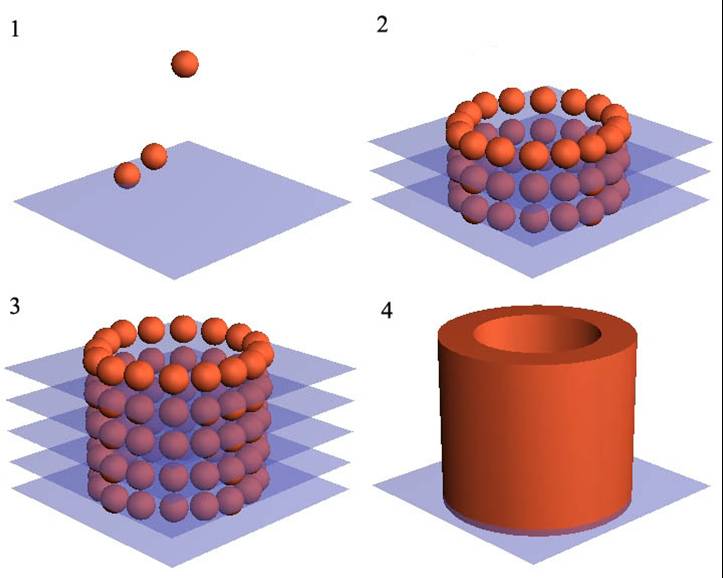
The process of engineering tissues is advancing to the point where researchers actually consider such possibilities as organ printing. The formation of organs proceeds, at least in principle, on the formation of tubes, which then fuse after incubation in a bioreactor. It was described this way in Wired.

Of course, organ complexity in terms of differentiated morphogenic function, shape, etc., will complicate the ability to produce organs that can even be considered for clinical trial. Hence, exceedingly optimistic assessments of when organ printing may reach trials are at least five years away (ten years is probably pushing it).

However, the ability to form the simple structures like sheets in bioengineered skin grafts or fill voids for regeneration of bone through extracellular matrices is already an established skill (see Tissue Engineering, Cell Therapy & Transplantation).

There are many, many questions to be answered, and many hurdles crossed, before bioartificial organs can be produced at the push of a button, but the possibility of success is just the sort of stimulant that feeds entrepreneurs (and drains VCs).


Related Tags: , , ,

Wednesday, May 03, 2006

Diabetes complications

Long term studies, performed with the goal of capturing more data that will enable more confident conclusions, sometimes become moot when more recent studies eclipse their premise.

In the May issue of the Journal Diabetes, researchers at the University of Pittsburgh Graduate School of Public Health reported on the Pittsburgh Epidemiology of Diabetes Complications
(EDC) Study's findings (see press release) that long term complicatons including heart disease and eye disease have not improved over the past 25-30 years for type 1 diabetes juveniles and adolescents treated at Children's Hospital of Pittsburgh between 1950 and 1980.

Now, I certainly respect long term studies, because arguably there are far too few of them and far too many studies that are not only too short term, but also too narrowly focused to reveal all the implications of treatment options. Short term data is awfully compelling, especially if you are a manufacturer seeking marketing approval or just a market edge.

But long term data can lose much of its relevance when it is eclipsed by more recent research that also passes the "long-term" test. Clearly, the EDC study is undercut by the Diabetes Control and Complications Trial conducted from 1983 to 1993, which showed very clear improvement in the risk and severity of complications associated with eye, kidney and nerve disease when Type 1 diabetes had their glucose more tightly controlled:
  • Eye disease
    76% reduced risk

  • Kidney disease
    50% reduced risk

  • Nerve disease
    60% reduced risk
Now, even though patients in the DCCT trial were not expected to have heart-related problems at the beginning of the trial, since they were on average only 27 years old, cardiograms, BP and blood fat were assessed during the trial, revealing at the end of the trial that those with tight glycemic control had significantly lower risk of developing high cholesterol, a significant indicator of risk for developing heart disease.

Therefore, one must seriously question findings of a type 1 study that did not specifically factor the level of glycemic control in a consideration of heart disease or eye disease risk. Almost as significantly, the patients included in this study were type 1 individuals who, at the latest, were patients 13 years before the end of the DCCT trial.

Further, in discussion of the findings, it is noted that "many of the guidelines currently used for managing type 1 diabetes are derived from what we know about people with type 2 diabetes. We need to recognize that they are two different conditions with different processes involved. Therefore, some of the complications we see in type 2 diabetes do not occur in type 1 and vice versa."

I am struggling to not be harshly critical of statements like this. Type 1 and Type 2 are well known to be starkly different, the only common denominator being a problem of one sort or another with insulin and therefore the need to keep an eye on blood glucose (again, the omission of the level of glycemic control being a glaring omission).

Fast forward to today (read "modern technology"). A type 1 diabetic diagnosed in 2006 faces an order of magnitude difference in treatment than one diagnosed between 1950 and 1980. Research should therefore focus on what we know now, and how we can enhance treatment, rather than what we knew almost 60 years ago.

-------
As a matter of obligation, I must note that my 11 year old daughter has type 1 diabetes, having been diagnosed over four years ago. So yes, maybe I'm biased, but I'm also extremely well informed on this topic. Her most recent HbA1c was 7.4.

Related Tags: , , ,

Thursday, April 27, 2006

Cardiovascular Drug-Eluting Stent Developers, Products, Status

Developers of Cardiovascular Drug-Eluting Stents

Company

Stent

Drug

Status

Abbott Vascular Devices

ZoMaxx

Zotarolimus

In clinicals; ZOMAXX II trial approved 6/05

Avantec Vascular (Goodman)

Duraflex

Pimecrolimus

In development

Biosensors International

BioMatrix

Biolimus A9

In trials; Expects CE Mark in 2006

Boston Scientific

Taxus Express2

Paclitaxel

CE Mark 1/03; FDA approval 3/04

Boston Scientific

Taxus Liberté

Paclitaxel

CE Mark 9/05 (launched 1/05); FDA approval expected mid-2006

Conor Medsystems

CoStar

Paclitaxel

CE Marked 2/06

Conor Medsystems

(Next-generation CoStar)

Pimecrolimus

Pimecrolimus licensed from Novartis in 3/06; Testing two devices: one loaded with pimecrolimus and another with both pimecrolimus and paclitaxel

Cordis (J&J)

Cypher

Sirolimus

CE Mark; FDA approved, U.S. launch 4/03

Cordis

Cypher Select

Sirolimus

CE Mark in 2003

Cordis

Cypher Neo

Sirolimus

In development

CorNova

(Undisclosed)

(Undisclosed)

In development

Devax

Axxess Plus (bifurcated)

Biolimus A9

In clinicals (positive first-in-man data reported 11/05)

DISA Vascular

Stellium

Paclitaxel

In development

Estracure/Medivas/Picarus

(Undisclosed)

17-(beta)-Estradiol

In development

Guidant

Xience V

Everolimus

CE Mark 1/06; European launch pending

Medtronic

Endeavor

Zotarolimus

CE Mark 7/05; U.S. launch planned in 2007. RESOLUTE trial began 12/05

Occam International (subsidiary of Biosensors International)

Axxion

Paclitaxel

CE Mark 7/05

Relisys Medical Devices

(Undisclosed)

Paclitaxel

In clinicals

Sahajanand Medical Technologies (SMT)

Infinnium

Paclitaxel

CE Mark 12/05

Sorin Biomedica Cardio

Janus Flex

Tacrolimus

CE Mark; launched in Europe 2/06

Terumo

Nobori

Biolimus A9

Clinical trial launched 6/05

X-Cell Medical

Ethos

17-(beta)-Estradiol

In clinicals

Xtent

Xtent

Biolimus A9

In clinicals; European launch planned in 2007, U.S. in 2009

Note: CV Therapeutics and MIV Therapeutics (among others) are developing coatings for coronary drug stents.

Source: MedMarket Diligence, LLC


Related Tags: , ,

Wednesday, April 26, 2006

More Drug-Eluting Stents Nearing Market; Biotech Market Progress -- April MedMarkets

In our April issue of MedMarkets, we cover the current and forecasted market for drug-eluting stents, considering the pending introductions of a number of competitors to established players J&J and Boston Scientific. We also look at the hard successes of biotech in bringing products to market and the growing success the industry is having in once again attracting invesment. Below is our outline of coverage:
  • Biomedtech, Combo Technologies Bolster Growth in Device Markets
  • Flurry of Cardiovascular Drug-Eluting Stents Nearing Market
  • MedMarket Outlook: Opportunities in Common Technology Threads
  • Early Stage Companies:
    • Intraoperative Determination of Tumor Margin
    • All -Polymer Hip Implant European Trial
    • Ultrasound-Assisted, Transdermal Insulin Delivery
  • Early Stage Company Financings: Active Implants, AngioScore, Aptus Endosystems, BlueBelt Technologies, CryoFluor Therapeutics, Ultradian Diagnostics
  • Recent Medtech Startups
  • Biotech Update: Carbon Nanotube Scaffolding Fosters Proliferation of Bone Cells
  • Drivers: California Judge OKs Stem Cell Research Agency
  • Leading Clinical Edge:
    • Measuring EPCs: A new Test for Heart Disease?
    • Artificial Nuscle Stronger Than Natural Muscle
    • "Neuro-chip" Leads to Improved Communication
    • U.K. Researchers to Produce Wound Monitor
    • Online (HTML) Only:
        • Articular Cartilage Paste Grafting Shows Promise
        • New Knee Repair Technique Introduced
        • Stent-Graft Improves Aneurysm Repair
        • Better Outcomes with Less-Invasive AAA Repair
        • CRT Devices Linked to Better Outcomes
        • Esophageal Stenting Found Effective
  • Developments
    • ISSYS Awarded Patent for Wireless Sensors
    • WorldHeart's LVAS Enters Key Phase in Animal Testing
    • Sorin to Launch Cobalt Chrome Carbostent
    • ATS Announces First Implant of Annuloplasty Ring
    • Medtronic's AAA Stent Receives FDA Approval
    • FDA OKs DexCom's Glucose Monitoring System
    • FDA Clears Bone Graft Product
    • Regeneration Technologies Launches New Implant
    • Online (HTML) Only:
        • MicroCHIPS Develops Wireless Drug-Delivery System
        • Cordis to Develop Cardiac and Vascular Institute
        • Nanogen Receives Clearance for CHF Test
        • Crestor Reverses Heart Disease
        • Biomet for Sale?
        • Orthopedic Companies Promote Knee Implants for Women
        • Pioneer Surgical, Encelle to Work on Spinal Fusions
        • FDA Approves St. Jude Closure Device
        • Protege by ev3 Receives FDA Approval
Related Tags: , ,

Tuesday, April 25, 2006

High Growth Medical Technologies -- Add'l Opportunities

Last week, I wrote the white paper, High Growth Medical Technologies, based on looking at different technologies I have seen and believe have excellent prospects for growth in the near term. I have since edited the white paper to not only clean up some typos but to also add a section on additional opportunities and to add a set of conclusions I see based on the nature of high growth technologies (where/how they derive, etc.). Nothing earth-shattering, but a few useful insights.

In the white paper, I also make reference to the Institute for Systems Biology, which I became aware about some time ago and for which I have great respect. This is the institute founded by Leroy Hood. In any event, I only made passing mention of this institute, but urge readers who aren't already aware of this multidisciplinary approach to biology to drill down further.

Related Tags: , ,

Friday, April 21, 2006

CMS Medicare Cuts for Cardiac Devices Won't Fly (This Time)

The proosal by CMS to reduce by up to 30% the reimbursement to hospitals for cardiac devices arises from a compelling need to reduce the clearly high costs associated with these devices (stents, defibrillators, etc.). Given the size of the proposed cuts, however, and their impact on device makers and hospitals, their negative reaction (see Boston Globe) was anything but surprising. The reality is twofold: the proposal will get scaled back moderately to significantly before a final rule, likely in October, and this CMS proposal is only the first shot fired in a volley regarding device costs. As I noted in my publisher's letter in the April MedMarkets, device manufacturers and healthcare systems alike have to recognize that the writing is on the wall.

Thursday, April 20, 2006

Nanotech/MEMS in medicine (nanomedicine) companies

This is preliminary(!) list of the companies involved in nanotech and/or MEMS with at least a minimum level of activity in applying the technologies to medical applications. This list was updated from a previous report by MMD, but still may included a number of companies (not yet edited out) who ultimately were unable to sustain the rampant, rabid optimism needed to drive investment in support of R&D in this area. We also will likely have a moderate to significant number of additional companies profiled.


Advanced Photonic Systems GmbH


Amersham Biosciences Corp


Anson Nano-Biotechnology Company Ltd


Aphios Corp


Aquamarijn MicroFiltration BV


Avidimer Therapeutics


Biocristal Ltd


Biodelivery Sciences International


Bio-Gate Bioinnovative Materials GmbH


Bionova Inc


Biophan Technologies


Biospectrum


C Sixty


Capsulation Nanoscience AG


CardioMEMS Inc


Digital BioTechnology Co Lts


DIOLAS Diodenlaser GmbH


Fairfield Sensors Ltd


Flamel Technologies SA


Genencor International


HealPlus International Inc


IGI Inc


ImaRx Therapeutics Inc


iMEDD Inc


Improvita Health Products Inc


Insert Therapeutics Inc


JenLab GmbH


JR Nanotech plc


Kereos Inc


Kliendieck Nanotechnik


Liplasome Pharma A/S


Magforce Applications GmbH


MagnaMedics GmbH


ManoMedica Inc


Micralyne Inc


Micromet AG


Micronics Inc


MicroTec Geselschafft fur Mikrotechnologie GmbH


MIV Therapeutics Inc


Molecular Profiles


Nanobac Pharmaceuticals Inc


NanoBio Corp


Nanobiotics


Nanobiotix


Nanocarrier Co Ltd


Nanocopoeia Inc


Nanogate Technologies


Nanogen Inc


NanoMed Pharmaceuticals Inc


Nanomix Inc


NanoPharma AG


Nanostream Inc


Nanosyn Inc


Nanotherapeutics Inc


Nanovax Inc


Newco Surgical


NOSE


Novosom AG


Nucryst Pharmaceuticals


Nutralease Ltd


Petnet Pharmaceuticals Inc


Pharmosol GmbH


Precision Optics Corp


Psvidia Ltd


Silex Microsystems AB


Skyepharma plc


Solubest Ltd


Spherics Inc


Spire Corp


Spinelix


Starpharma Pooled Development Ltd


Tecan Group Ltd


The report is about a week away, depending on how much additional content we feel meets the "absolutely-have-to-include-this" test. Related Tags: , , , ,

Wednesday, April 19, 2006

Drug-Eluting Stents Update; plus Biotech Progress and Milestones

The April 2006 issue of MedMarkets updates the market for drug-eluting stents. We also review the status of the biotech industry, considering a report from Ernst & Young (Beyond Borders: The Global Biotechnology Report) and other data on this ever-optimistic industry. (BTW, I found it particularly curious that the E&Y report referred to this year as the 30th anniversary of the biotech industry -- having once worked for one of the first biotechnology companies, Collaborative Research, which was founded in 1961, later named Genome Therapeutics and now known as Oscient Pharmaceutials, I guess biotech just measures time differently.)

Coverage in the April MedMarkets is outlined (and will be updated) on our archives page.

Lastly, thank you for those comments received on our all-too-brief, but apparently well received, "High Growth Medical Technologies" white paper. We are considering updating and expanding it in the near future.


Related Tags: , , ,

Thursday, April 13, 2006

High growth medical technologies

The most rewarding aspect of tracking medical technology markets is witnessing the innovation that emerges as entrepreneurs device solutions to healthcare problems that sometimes providers didn't know exist (or at least couldn't put their finger on).

We put together a small white paper looking at some of the high growth medical technologies we see for the next few years, and probably beyond.
Related Tags: , , ,

Tuesday, April 11, 2006

Diabetes markets (Type I & II)

The market for products worldwide in the management of diabetes is the subject of an analysis done by MMD at the end of 2005. While a plethora of studies are available on markets for diabetes-related products, our analysis succeeds uniquely by looking at both established and developing technologies with a more critical eye and doing so in a global analysis.

Worldwide Diabetes Market 2004


Medications

$15,000 million

Diagnostic devices

$8,000 million

Insulin therapy devices

$275 million

Insulin pumps

$1,000 million

TOTAL

$24.3 billion


This $24 billion global market -- big enough as it stands -- represents only the tip of the potential market iceberg, for several important reasons.

  1. For the majority of Type 2 diabetes, the adult onset segment, is an undiagnosed, untreated population

  2. A huge pent-up demand exists for improved treatment due to the need for frequent testing (finger pricks) and insulin administrations (pen/syringe)

  3. A huge payer demand exists for effective treatment (read high patient compliance) that reduces the incidence of costly complications

  4. Advancements in diagnosis OR treatment that lead to (pick one) improved quality of life or reduced rate of complication leading to even a modest increase in the penetration of the Type 2 undiagnosed will be a huge boon to the market
So, the technologies being pursued with aggressive energy include:
  • minimally invasive glucose monitors (optical coherence tomography, ultrasonic, measurement, infrared, etc.)
  • closed loop pump/monitor systems ("artificial pancreas")
  • stem cells ("cure")
It is very diffiicult to discern between those analyses of the diabetes market that are largely driven by spreadsheet formulas and those that both grind out the hard numbers and apply real insight to determine the defensible timing and impact of technology developments.

Our intention and our belief is that our hard work has produced the latter.

Monday, April 10, 2006

Bioengineered bladders

News came out last week (published in Lancet) on the successes achieved by well-known researcher Dr. Anthony Atala, professor at the Wake Forest Institute of Regenerative Medicine, in the development of pediatric bladders engineered from patients' own cells.

The development of bioengineered organs, which faces many technological hurdles but also holds tremendous promise, was part of our report, Tissue Engineering, Cell Therapy and Transplantation, published in 2005. There is lengthy waiting lists for organs of all types, and even those patients who are lucky enough to receive transplanted organs are then faced with the ongoing requirement to take immunosuppressive drugs to prevent rejection.

Dr. Atala envisaged the solution, but was stymied in bringing it to reality and is only now, after some 16 years of research, succeeding in being able to harvest the right patient cells, culture them ex vivo to grow from one million cells to 1.5 billion cells, apply them to a protein scaffold and reimplant them back in the patients.

Dr. Atala is on the Board of Directors for Tengion (http://www.tengion.com), a company developing the technology. From Tengion's website:

Tengion’s technology of creating a neo-organ, such as a neo-bladder, starts when a surgeon sends the patient's biopsy to Tengion. Tengion's scientists identify and multiply the patient's own healthy progenitor cells, and then place these cells on a structure that is shaped like the needed organ or tissue (a bioresorbable scaffold). The resulting neo-organ becomes ready for implantation after a period of maturation. The surgeon then implants the neo-organ in the patient's body, where it integrates with the rest of the body and becomes functional. By contrast, the current therapy for urinary bladder reconstruction, Augmentation Cystoplasty, dates from the 1890’s and is associated with acute and chronic risks and complications.

Organ replacements are a ripe area of development in the field of tissue engineering and cell therapy (again, see our report). The intrinsic value of bioengineering tissues/organs from the patient's own cells is unquestioned, given the organ shortages, the need for immunosuppressants and other constrains of organ donation, as noted.

What makes Dr. Atala's success noteworthy is that tissue engineering of this type is among the most promising of medical technologies insofar as its ability to dramatically change treatment options for serious diseases. The initial tissue engineering successes were limited to less complex anatomical structures, such as skin, but has been expanded to include bone, cardiac tissue and other tissues with more complex functional and structural roles. Moreover, Dr. Atala's work is like the "rising tide that floats all boats," in that the process of isolating the appropriate cell types, optimizing their conditions for growth and applying them to scaffolds or matrices to form the transplantable organ structures can be replicated by researchers focused on other organ types.

Friday, April 07, 2006

Startup Medtech Companies

These are recent startups I am reporting on in the April issue of my newsletter. As always, there's no guarantee (or endorsement on my part) that any of these will succeed:


Company
Principals or Investors
Location
Technology
Founded
BeneChill, Inc.
MedVenture Associates, Prospex Medical
San Diego, CA
Non-invasive cooling technology for treatment of cerebral ischemia
2005
Bioasssessments, LLC Peter Hyde, Christopher Hyde Elkton, MD Real-time angiotensin monitor for salt sensitivity2006
Neotract, Inc. New Enterprise Associates Palo Alto, CA Surgical urological devices 2005
NeuroLife Noninvasive Solutions Daniel McChesney, MDPittsburgh, PA
Noninvasive device to accurately monitor brain pressure2006

The newsletter is described here. The coverage in back issues is detailed here.

advanced MEDICAL technologies

Am I the only one who gets frustrated when finding that most references to "technology" are limited only to discussions of computers? I know it's a combination of the investment industry (which in this respect seems remarkably lazy) seeking to simplify the world so that it can post prognostications without using many words . . . "technology stocks are up on positive news from Microsoft."

But for the love of Thomas Edison, technology isn't only computers! It's bridges, medical devices, rockets, medical devices, automobiles, medical devices...

What are you going to get more excited about, a piece of hardware that can ultimately only handle or transfer information in some unique way, or a medical device that saves a life or even just dramatically improves it?

People innately don't undestand medicine and they can't be faulted for it. At the same time, it is inherenly in the interest of physicians to mystify the science. Instead of saying, "your child is bleeding from the lungs and we don't know why," they say, "your child has a confirmed diagnosis of idiopathic pediatriac pulmonary hemorrhage".

But there is good information out there, and it's getting better just as the healthcare consumer is yearning for it. Now, I'm pretty healthcare savvy, but when people call me up and ask what I think of some obscure symptom, I suggest (after telling them to call their DOCTOR) they take a look at WebMD. As for sites that are less, consumer-oriented, I like sites like MedGadget, for the fact that the site's authors are (apparently) a group of young MDs and that this leads them to a youthful enthusiasm for new stuff, even an appreciation of the technologies' missteps (see Patently Silly which I came across awhile back and recently saw on MedGadget's site) and others. If you're in the medical product industry, however, I absolutely have to recommend my own site, MedMarket Diligence.


Micro and nanotech medicine

We're working on finalizing this report. It shouldn't be a surprise to anyone who has looked at the nanotech "industry" over the past couple years (we did a report three years ago) that it is the most hyped, promise-filled industry that has kept forestalling investors and any other interested parties from seeing concrete successes. Producing a report on this subject that achieves even the least resemblance to realistic timelines or realizable potential demands a diligent, critical eye to filter out the unlikely-to-ever-be-fulfilled potential.


Having said that, even the most conservative analyst would have to look at this industry and recognize that, REVENUES ASIDE, the industry is exploding with activity. The number of companies pursuing applications in nanotech and MEMS is huge. When you then distill the content down to focus only on those in the medical arena, the numbers are still huge.


There is revenue, too, and it is growing steadily toward that hockey stick upward shot that will take place, well, I'm not saying yet... We're still applying our analysis and tracking multiple technologies approaching the launch pad.


* * *


Micro- and Nano-Medicine: Technologies, Applications, Industry, and Markets Worldwide

April 2006

Report #T625

· 250 pages · 45 Exhibits · 72 Company Profiles · Pub. Date April 2006 · Report #T625

The Report will be a detailed assessment of the products and technologies under development in the nanometer scale and micrometer scale levels with clinical applications, and an assessment of the market potential for products/technologies to be successfully commercialized for use in clinical practice within a ten year forecast period. This assessment will identify the technological, market, regulatory or other hurdles to be crossed en route to commercialization. The report will provide particular emphasis in detailing the current activities and status of product development at active companies. The analysis will be directed toward revealing specific opportunities for current or hopeful competitors.

Wednesday, March 29, 2006

Our VC tracking URLs

These are some of the VC and other sites we track to keep an eye on new investments and new technologies in order to identify formation of new medtech companies.


http://www.atvcapital.com/portfolioGroup.php?id=9

http://www.aperturevp.com/portfolio.htm

http://www.arcapita.com/corporate/current/current-healthcare.html

http://www.canaan.com/portfolio_life.html

http://www.carecapital.com/companies.asp
http://www.dpbioventures.com/

http://www.domainvc.com/Portfolio.asp?Filter=A
http://www.frazierhealthcare.com/portfolio/index.asp
http://www.goldenpineventures.com/portfolio.htm
http://www.herculestech.com/portfolio/portfolio.asp?CompanyID=3225&IndustryID=15

http://www.denovovc.com/portfolio/index.html
http://www.wispartners.com/

http://www.kpcb.com/portfolio/portfolio.php?lifescience

http://www.lifescienceangels.com/content.php?cid=1013
http://www.magicvc.com/portfolio/index.html

http://www.masonwells.com/Portfolio.htm

http://www.massmedic.com/members_primary.htm
http://www.nea.com/PortfolioCompanies/Healthcare/Devices/index.cfm?&SA=1

http://www.nlvpartners.com/portfolio.html#medical
http://silk.nih.gov/public/cbz2zoz.@www.sbirsttr.fy2006.txt
http://www.northbayangels.com/pages/DealsDone.jsp

http://www.onset.com/portfolio/index.html

https://www.pequotventures.com/portfolio/healthcare.html

http://www.pitango.com/portfolio.asp

http://www.polarisventures.com/Portfolio/ViewBySector.asp#

http://www.pwcmoneytree.com/moneytree/nav.jsp?page=industry
http://www.prismventure.com/portfolio/lifescience.asp
http://www.radiusventures.com/healthcare_industry.asp
http://www.tvmvc.com/site/lsportfolio.php
http://www.threearchpartners.com/html/portfolio.html
http://www.tmvp.com/Portfolio.html
http://www.tricardia.com/

http://www.usvp.com/home.html

http://www.devicelink.com/links/venture.html
http://www.versantventures.com/portfolio.html

http://www.wfdventures.com/index.html