Thursday, August 24, 2006

The Intellectual Property Yardstick


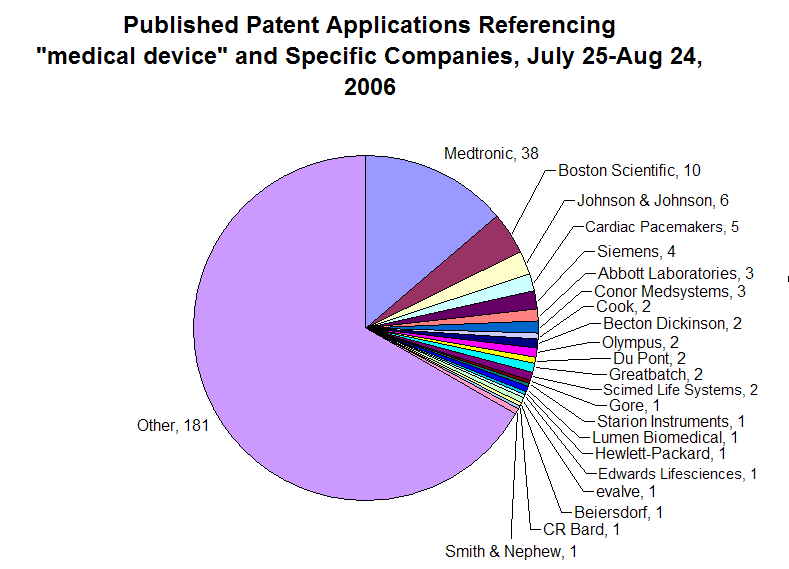
Out of curiosity, since I see Medtronic so frequently on patents and patent applications, I decided to take a one month snapshot, from July 25 to August 24 (today) of patent applications referencing the phrase "medical device" and examine it for the patent assignee company or other company reference. Here's what came out:


Medtronic's dominance (38 patents for medical devices in one month) of the intellectual property game is pretty astounding. It begs the question of how a player can hope to dominate the market without having some technological advantage, and whether pursuing a campaign of patent strength will correlate with success in the market.

These are just questions.

Wednesday, August 23, 2006

Medtech analysis test drive

We've added a new feed to our list of rss/xml feeds on medical technology content. The new feed is entitled, "Sample content from the medtech reports of MedMarket Diligence, LLC." Here, we will regular post excerpts and other sample data from the library of medical technology market reports we have published (or are about to publish). We want our audience to get a feel for what the detail is in these 200+ page reports.

The xml link is here.

Tags: medtech

Tuesday, August 22, 2006

Energy-Based Devices in General Surgery


The dynamic market for energy-based devices used in general surgery is growing steadily with compounded annual growth rates of 12% projected for the short term. This market includes devices based on ultrasonic, radio frequency (RF), light, thermal, hydromechanical, cryogenic and microwave technologies.

The popularity of ultrasonic devices is due in large part to the fact that they do not utilize heat when sealing tissues, thus effectively eliminating smoke from the operating room. This can reduce costs for hospitals as the absence of smoke eliminates the need for smoke evacuation systems. Meanwhile, the lack of smoke also improves the surgeon’s line of vision. Also to their benefit, ultrasonic surgical instruments combine cutting, grasping and coagulation into one tool set, thus further reducing cost while also reducing surgical time as there is no longer a need for intraoperative instrument exchanges. Lastly, patient safety is enhanced because with ultrasonic systems, there is no electric current passing though the patient’s body, which can result in lateral tissue damage.

The second largest segment in the market for energy-based devices used in general surgery comprises devices based on RF energy, which (like laser systems) rely on thermal welding to achieve tissue coagulation. RF devices comprise roughly 27% of the overall market for devices used in general surgery. Growth in this market segment is being driven by the introduction of new technologies into the marketplace.

Thermal energies, which are used most often in surgeries to treat benign prostatic hyperplasia (BPH) and menorrhagia, also have application in general surgery, however, less than 5% of the market is devoted to these systems. Newly developed hydromechanical (based on water-jet technology), cryogenic, and microwave systems also are being introduced into the market, thus further fueling market growth in devices designed for general surgery.

Many developments have occurred among the manufacturers in this dynamic market over the last several months.

(Further details in August 2006 MedMarkets.)


Tags: , ,

Wednesday, August 16, 2006

August 2006 startup medtech companies

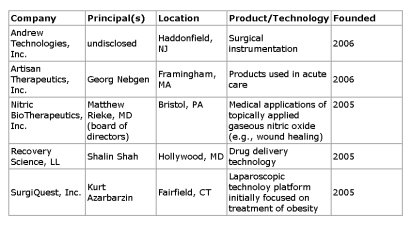
These are the startup companies we identified and have published in the August 2006 issue of MedMarkets.


Artisan Therapeutics, Inc. -- Framingham, MA; no URL
Andrew Tehnologies, Inc. -- Haddonfield, NJ; http://andewtechnologies.com [under contruction]
Nitric BioTherapeutics, Inc. -- Brisol, PA; no URl
Recovery Science, LLC -- Hollywood, MD; no URL
SurgiQuest, Inc. -- Fairfield, CT; no URL


Source: MedMarkets, August 2006, MedMarket Diligence, LLC

Tags: , , , ,

Monday, August 14, 2006

Biomaterials Stimulating Orthpedic Growth

The total world market for all orthopedic devices and materials was worth $20 billion in 2005 and is growing at annual rates in the range 7-10%; the US accounts for almost half the market overall. A major contributor to the market, both in terms of size and growth, is orthopaedic biomaterials. This segment contributed $4.6 billion (23%) to the global orthopaedic market in 2005 and furthermore is growing considerably faster than the market overall, with a predicted CAGR in the region of 15% over the next five years. The buoyant performance of this sector is due to a combination of several factors, including demographic and lifestyle changes, the emergence of new types of biomaterials offering significant improvements in performance, the premium prices associated with novel high-tech products, and evolving attitudes among orthopaedic surgeons.


From August 2006 issue of MedMarkets and forthcoming MedMarket Diligence report #M625.


Tags: , ,

Tuesday, July 25, 2006

Artificial Pancreas for Diabetes: The Closed Loop Pump/Monitor

Two of the most important milestones in the development of products for the treatment of diabetes include the development of the completely non-invasive glucose monitor and the "artificial pancreas", or closed loop system that monitors blood glucose and administers insulin to produce a homeostatic-like control of glucose. Both systems represent areas of tremendous development activity, driving work at multitudes of companies and other institutions due to the chronic nature of diabetes and the high cost of complications arising from inadequate glucose control. Noninvasive glucose monitoring -- being pursued through development of near infrared detection, interstitial fluid measurement, laser lancing and other methods -- has long been foremost due to the comparative challenges presumed to exist for closed loop monitor/infusion pump. However, given the seemingly no-less-daunting task of achieving noninvasive and reliable monitoring technologies, while continuous monitoring and external and implantable infusion pump technologies rapidly evolved, the prospects for the artificial pancreas have grown.

At the 66th Scientific Sessions of the annual American Diabetes Association meeting, there was considerable focus on efforts to develop the artificial pancreas. Rather than summarize those efforts myself, I instead provide this excellent review by Andrew B. Muir, MD, on Medscape.

The possibility remains for stem cell research to enable pancreatic cell transplant or similar cell based therapies, since the restriction on federal funding is regressive but destined to succumb to more enlightened consideration of the issue -- science and ethics -- than is possible with the current administration.

Tags: , ,

Wednesday, July 19, 2006

Local Market Volume of Medical/Surgical Procedures

I continue my discussion of our use of the Medicare 100% file and other datasets to serve specific needs of medical product manufacturers.

As I mentioned, the Medicare 100% file is large (measured in gigabytes) unwieldy and, as anyone who has purchased raw data from the U.S. government can attest, the file is not constructed in the most convenient format to allow simply queries, summaries or other processes that will reveal meaninful insights. And, given the cost, the need for HIPAA-related disclosure agreements to be signed,m the dataset is not quite amenable to data analyst with occasional interest or need in purusing it. Lastly -- and this goes for all reimbursement or discharge survey datasets -- whatever logic may govern the coding systems (DRG, ICD-9 and CPT4) used in this data, the reality of how clinicians fle claims and how survey data is collected can result requires that working with claims-based and survey-based datasets be done by someone with experience in these issues.

Now you might understand why the question, "So if this is in the public domain, how is your product in any way unique?" causes me to take a breath before answering.

MMD has joined with Medical Technology Partners (MTP) to capitalize on MTP's use of these large datasets, which have been acquired for reimbursement consulting, to use them for answerng very technology-specific and facility-specific questions raised by medical product manufacturers.


Tags: , ,

Tuesday, July 18, 2006

Top Volume Hospitals by DRG, ICD-9

[The data we offer, and discussed below, includes data on the top volume hospitals by DRG or ICD-9. We drive the data reports from the 100% Medicare file (a very big, unwieldy file that is impractical to work with unless you have the resources and need to work with it). This is the 2005 volume of actual claims filed at each facility. Not estimates.]

We had no idea when we started offering clinical utilization data to medical product companies seeking data in support of new product introduction, etc., that we would have such a positive response to the offer of providing the data on the top volume hospitals with claim data on the DRG or ICD-9 codes of interest. It was really overwhelming.
MMD (MedMarket Diligence) looked at the types of questions being asked, and the purposes being put to the data, by the typical medical product company client -- VP, President, Director, Product manager -- and realized that while on the high end of needs ("what products should we be developing?" or "what companies should we acquire?") the questions were adequately answered by U.S. aggregate data on total volume, with trends, payer segmentation, reimbursement amounts, and the like, but on the "low" end we were not helping clients enough.

By low end, I mean answering questions about "where should I send my sales reps tomorrow?." Well, how about looking at the hospitals in any geographic territory that have the highest volume utilization, measured by patient discharges and the specific diagnoses or procedures currently or potentially using the company's products?

A
fter we started adding this to quotes, we sudddenly realized that hospital-specific data was in very big demand.

There are a lot of other aspects to working with this data, making sense of it and delivering it the right way. In subsequent posts, I'll describe that a little further, but don't have time now.

I have two more quotes to get out before day's end.

Tags: , ,

Monday, July 17, 2006

Technologies in Treatment of Stress Urinary Incontinence

Bulking Agents for Stress UI

One important weapon in the arsenal of noninvasive or minimally invasive therapies for Stress Urinary Incontinence (SUI) comprises bulking agents—injectable substances that expand the intrinsic sphincter of the bladder, allowing it to withstand greater pressures.

There are several companies exploring or developing bulking agents for SUI (see chart). For many of these, the technology was initially designed as a therapy for treatment of wrinkles or other dermal defects, gastroesophageal reflux disease (GERD), wound care, drug delivery or other therapy.

Treatment for urinary incontinence ranges from pelvic muscle rehabilitation to behavioral therapies and pharmacologic therapies. Beyond that, surgical therapies exist and are becoming increasingly less invasive. Minimally or even noninvasive interventional therapies are extremely attractive to both young and old patients; younger patients don’t want to be slowed down by an open surgery while many older patients may not be strong enough to undergo such.

The latest therapies being developed to treat SUI involve bulking agents, sling or urethral supports, and even stem cell therapies, among other procedures.

At least 13 million Americans suffer from urinary incontinence, a condition that is far more frequent in women than in men. In the general population between the ages of 15 and 64, 10%–30% of women are affected, compared to only 1.5–5% of men. At least 50% of all nursing home residents have urinary incontinence, 70% of whom are women.

The Agency for Health Care Policy & Research estimates that $16.4 billion is spent annually on incontinence-related care: $11.2 billion for community-based programs and at home, and $5.2 billion in long-term care facilities. In addition, $1.1 billion is spent annually on disposable products for adults.See MedMarkets, July 2006 issue.

Tags: , ,

Monday, July 10, 2006

Spine Surgery Market Development at a Pivotal Stage

[See also "Spine Surgery Worldwide, 2008-2017." Published March 2008. See link.]

Coverage in the July 2006 issue of MedMarkets includes an overview of the U.S. and worldwide spine surgery market (excerpt below).

Treatments for disorders of the spine – ranging from degenerative disc disease, kyphosis, diskitis, spinal stenosis, spondylolysis/spondylolisthesis and others – stand at a crux between multiple options. Spinal fusion (lumbar and cervical) will be on the rise for a few short years before disc replacement/repair and other approaches will have begun to penetrate significant caseload. Competitors in the market for spine surgery products face a combination of opportunity and risk that will result in big rewards for some and only brief rewards for others.


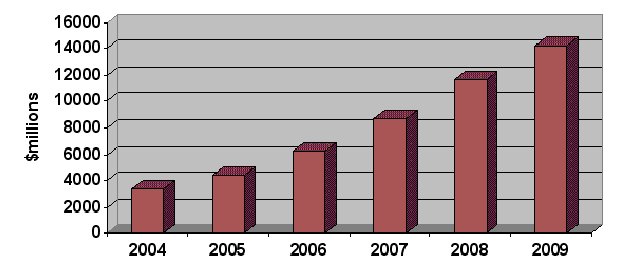
Worldwide Spine Surgery Market, 2003-2009


Source: MedMarket Diligence, LLC, Report #M501, "Worldwide Spine Surgery Market." Note: This report has been updated, January 2008, with report #M510, "Spine Surgery Worldwide, 2008-2017." See link.

Treatments for these disorders range from the non-surgical and inexpensive (bed rest) to complicated surgeries designed to excise tissue and halt vertebral segment motion (spinal fusion). “Back trouble”—especially among aging baby boomers and the elderly—is in no imminent danger of decline. Consequently, the spine-related osteobiologics market in the U.S. will undergo steady growth for the next decade. Although certain treatments and technologies currently enjoying a robust market share will likely be replaced by those now in development, older men and women will seek the best treatment alternatives available to help them maintain an active lifestyle.

Over the past two decades, the worldwide spine industry has grown dramatically, with annual revenues in 2004 estimated at about $3.4 billion. Disorders or conditions located in the lumbar area of the spine account for the majority of these revenues.

Tags: , ,

Tuesday, July 04, 2006

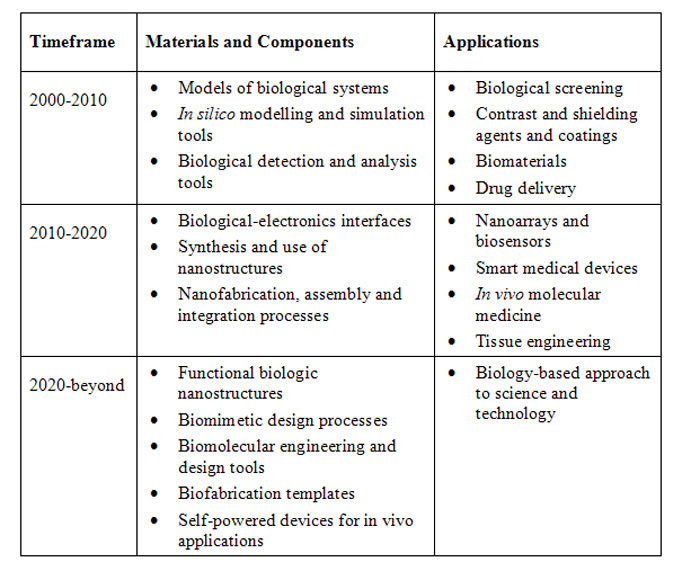
Timescale of nanotechnology materials/components and application development

Nanotechnology Biomedical Application Development Timescale

Source: MedMarket Diligence, LLC, from "Micro- and Nanomedicine: Technologies, Applications, Industry, and Markets Worldwide," report #T625. Published May 2006.

Tags: , , ,

Monday, July 03, 2006

Drug delivery and nanotech

Nanotech products are being developed to improve delivery of drugs with poor solubility. It is estimated that 40-50% of newly developed drugs have solubility problems. Sales of drugs with poor solubility and low bioavailability totalled $72 billion in 2003, up from $64 billion in 2002. The total world market opportunity for nanotech-derived drug delivery products and services was estimated at $290 million in 2005 (0.6% of the total drug delivery market, valued at more than $43 billion). This is predicted to grow at a CAGR of 50% to reach $8.8 billion by 2015, or over 5% of the total drug delivery market.

Many nanotech research projects are devoted to improving drug delivery and targetting in cancer. The oppurtunity is considerable. The total cancer chemotherapy market in 2005 was estimated at $10 billion, including plain and DDS (drug delivery system) products. The DDS market share was 20% in 2000; this is forecast to grow to 80% by 2010. The cancer market itself will grow as the over-65 population in developed countries increase from 12% in 2000 to 20% in 2020.

From MMD's May 2006 report, Micro- and Nanomedicine.

Tags: , , , ,

Friday, June 23, 2006

Endovascular Technologies Drive AAA and TAA Stent-Graft Market

Stent-Grafts for AAA will represent a $1 billion market in less than five years.

Endovascular aortic repair (EVAR) is one of the most significant technological advances in vascular surgery over the last decade and continues to show promise as a less-invasive alternative to conventional surgery in treating patients with abdominal aortic aneurysms (AAAs) or thoracic aortic aneurysms (TAAs). As manufacturers make ongoing refinements to endovascular devices for aneurysm therapy, the estimated 2.7 million aortic aneurysm patients in the United States have more treatment options available than ever before. Although aneurysms are far less common than heart attacks, they are also far more fatal. According to the National Center for Health Statistics, roughly 15,000 patients die annually from ruptured aortic aneurysm, and this number may be low because the condition can be overlooked easily in a standard autopsy. Ruptured abdominal aneurysm is currently the 13th leading cause of death in the United States. In fact, as many as 2 of 3 patients with an AAA rupture die prior to reaching the hospital. Even with open surgery, there is an average 48% mortality rate associated with patients having a ruptured AAA. AAAs typically enlarge slowly and without symptoms, making them difficult to detect. However, detecting AAAs early and repairing them can decrease the death rate by one-sixth. TAAs are also under-diagnosed because most patients are asymptomatic. The incidence of TAA in the United States ranges from 15,000 to 30,000.

Rapid Market Growth Expected
The endovascular stent-graft market will continue to expand rapidly for a number of reasons. One primary driver comprises increasing numbers of patients who will select this less-invasive procedure over the traditional open surgery with its longer recovery periods and higher rates of complications. In addition, the aging population will continue to expand, putting more people at risk for aneurysm. It is estimated that 5%–7% of those over age 65 has an AAA. Finally, implementation of screening programs will detect a greater number of cases of aortic aneurysm, thus leading to an increase in the number of endovascular stent-graft procedures. The chart on page 1, “Worldwide Market for AAA Stent-Grafts,” illustrates this growth. The first endovascular aortic grafts were available for use in the United States in 1999. Now there are four AAA endografts that are FDA-approved and available commercially in the United States for EVAR: Cook’s Zenith AAA, Endologix’ Powerlink, Medtronic’s AneuRx, and Gore’s Excluder. Gore is the only company with a TAA endograft (the Gore TAG) on the U.S. chart, “Developers of Endovascular Grafts for Abdominal and Thoracic Aneurysm Repair”). TAA endografts show great potential, not only for the treatment of TAA but also for other anomalies of the thoracic aorta, such as acute and chronic dissections, penetrating ulcers and traumatic injuries. U.S. research institutions are serving as clinical trial sites for next-generation aortic endografts made of synthetic fabrics. Boston Scientific’s TriVascular Enovus AAA and the Terumo/Vascutek Anaconda are examples of investigational endografts that incorporate new design features, taking into account varying patient morphology. market; other manufacturers’ devices are in development and/or are available outside the United States. TAA endografts show great potential, not only for the treatment of TAA but also for other anomalies of the thoracic aorta, such as acute and chronic dissections, penetrating ulcers and traumatic injuries. U.S. research institutions are serving as clinical trial sites for next-generation aortic endografts made of synthetic fabrics. Boston Scientific’s TriVascular Enovus AAA and the Terumo/Vascutek Anaconda are examples of investigational endografts that incorporate new design features, taking into account varying patient morphology.

Looking Ahead
The rate of EVAR should increase rapidly within the next decade with the advent of promising technologies such as lower-profile devices that allow percutaneous delivery and endostapling devices that offer increased durability as well as the ability to treat short, angulated necks. Imaging modalities used with EVAR also will continue to improve, providing greater accuracy for screening, as well as procedural and post-procedural surveillance needs.

Tags: , , ,

Tuesday, June 20, 2006

Meanwhile, American Medical Systems Corners a Market

Company Steadily Secures the Urogenital Treatment Market
The acquisition of Laserscope by American Medical Systems Holdings this month for $715 million adds a certain punctuation to AMSH's steadily growing presence in the field of urogenital medicine or, as the company refers to it, "pelvic health." Lest there be any doubt, AMSH has been on a Tyco-like drive of acquisitions that have garnered it a clear lock on urogenital markets. In May 2006, the company acquired Solarant Medical, a maker of minimally invasive therapies for stress urinary incontinence. In April 2006, AMSH acquired BioControl Medical for its implantable electrical stimulation technology, which the company will use to develop its own incontinence treatment technology. In 2004, the company acquired TherMatrx, the developer of an office-based thermal treatment for BPH, In 2003, the company acquired CryoGen, the developer of cold technology for treatment of menorrhagia, and the company also acquired erectile dysfunction technologies from Endocare in 2003...the list goes on.

While Boston Scientific and Medtronic fight tooth and nail in both the courts and the markets to gain turf in the cardiovascular device industry, we watch with interest as AMSH has steadily purchased its own plot of real estate in the urogenital arena, a field that while putatively overshadowed by cardiology, represents a hugely attractive area of upside potential, and growing less crowded all the time.


Tags: , , , , ,


Friday, June 16, 2006

Megatrends in Medical Technology

(June 2006 MedMarket Outlook in MedMarkets)

Megatrends in Medical Technology
Aside from other trends in the medical product industry we've addressed previously in MedMarket Outlook, such as the dissolution of boundaries between device and pharmaceutical technologies, the increasing integration of information and information technologies with medtech, and the rise of "holistic research" (aka "systems biology") that recognizes the value of studying pathology with a multidisciplinary scientific approach, there are specific overarching trends and forces that are changing medical technology and the markets for them on a grand scale.


Stem Cell Research
The debate about stem cell research was no more likely to end as a result of President Bush's restriction on federal funding as it was that the established cell lines would be sufficient or appropriate for research (they weren't) or that the case would abate (as they have not) for the use of stem cells in the treatment of diabetes, Parkinson's, spinal cord injury or other disease and disorders. Here, we make no ethical case for or against embryonic or somatic stem cell research --- the debate is likely to become wholly moot in a matter of time --- we only comment on the inevitability of the science moving forward one way or another. In June, Harvard University's Harvard Stem Cell Institute confirmed that two projects focused on cloning to produce embryonic stem cells will move forward under private funding. The projects employ the same general type of research, somatic cell nuclear transfer, that is underway at the University of California at San Francisco and at the University of Connecticut's Center for Regenerative Biology. Aside from these approaches, a cursory review of the state of cell research in general and stem cell research in particular will reveal that researchers have both the innovation and the willingness to pursue cell therapeutics that lead to treatments heretofore not possible. It seems fairly certain that, looking back at progress in the development of the range of cell therapies, the Bush administration's federal funding restriction will be seen to have produced a momentary hitch rather than the obstacle it was originally portrayed as producing.


Nano- and Microscale Juggernaut Forces
There are as many different functions -- maybe even more -- being provided by technologies designed around nanoscale or microscale level as there are different types of these technologies. The sole criteria for technologies grouped into the nano and micro categories is size. Aside from their size, there is then little common among these technologies, which represent an incredible array of devices, molecules, materials and other products that achieve functions not possible on the macro scale, even if one only considers nano- and microscale medical applications. These range from products that are largely nanoscale materials (e.g., silver nanoparticles as antimicrobials in wound management) to those providing functions such as artificial retinas, cancer diagnostics, drug delivery and biosensors. As an industry, nanotechnology (more so than MEMS, which has found considerable realized success) has been plagued by a combination of inflated promise and underestimated technical hurdles, but while MEMS (microelectromechanical systems) has found bigger initial commercial success, nanotechnology has begun scoring commercial success that will ultimately result in markets that will eclipse MEMS products by orders of magnitude.


Open Surgery in Decline, or the Rise of the Minimally Invasive, Less Invasive, Interventional, Percutaneous and Other Alternatives to Surgery
Often stated, but never emphasized enough, is the compelling drive for treatments (that were all too recently delivered exclusively via surgery) to be associated with, or replaced by, ever-decreasing invasiveness. Device manufacturers have well established records for producing devices that not only minimize the trauma of surgery (e.g., laparoscopy) but also promise to make open surgery obsolete (e.g., percutaneous procedures like coronary anastomosis). Driving this trend is the persistent recognition that "collateral damage" in achieving clinical outcomes is unacceptable, whether from the perspective of the physician seeking to optimize results, the healthcare system seeking to minimize the costs of healthcare (or optimize revenue streams by being able to market the latest less-invasive techniques) or the patient seeking to minimize the impact of surgery on his/her busy lifestyle.


Disease State Centered Marketplaces
Certain technologies in certain clinical areas remain the predominant if not exclusive option for treatment in those areas. However, in 2006, any legitimate competitive analysis of a market considers a multitude of different technology types. Case in point: any treatment for coronary artery disease will of necessity consider the competitive threat of bare versus eluting stents, angioplasty, atherectomy (waning but not gone), products for identification/treatment of vulnerable plaque, traditional coronary artery bypass, MIDCAB, OPCAB and other bypass variants (e.g. robotics), percutaneous bypass, atherosclerosis-reversing drugs and others. Compelling arguments must be created through the intrinsic advantages of new technologies in order to secure sought-after shelf space in the cost-fixated healthcare system armamentarium.


Materials Science Creating/Upending Markets
Underlying a stunning number of new technologies, from biodegradable/resobable stents, cellular scaffolds and a wide arrange of other implant types are the advances in materials sciences that are leading to the ability to engineer implants that now go well beyond providing solely structural roles. Driving these advances are the needs to improve upon the function of implants as static, inert devices that do not fully reflect the in situ need upon implantation, fail to adapt to changing conditions or otherwise do not provide the functions that optimize the end results of the implants' use. Whether by impregnation with different substances or by the nature of the implant material employed, implants have improved considerably in being able to not induce an anti-inflammatory response, to provide anti-microbial function to the device, to minimize formation of blood clots and to avoid the effects like restenosis of vasculature following interventional procedures. With the need for implants frequently changing at some point after their implantation, more devices -- biodegradable/bioresorbable stents, matrices/scaffolds for tissue engineering and others -- are being developed that are either resorbed completely by the body or just enough to be expelled in whole or in part once their purposes have been served. Lastly, materials science and implant engineering in general have also been able to simply produce implants that are more easily deployed through tortuous twists in vessels or through narrow channels in endoscopic devices. Expectations are that more complex functions will be served by implants as a result of these trends and forces in development, from the increasing sophistication of drug delivery in various passive and active forms, to the ability of implants to respond via biofeedback to changing conditions in situ, and to providing increasingly sensor-like functions. Increasing demands are being made of the medical product marketplace -- cost, competitive technologies, financial performance of public companies, etc. -- but it seems clear that these demands are driving the proliferation of technologies that indeed satisfy them, sometimes with each advance creating ever greater demand in an endless progression. It also seems apparent that this "technology burst" is taking place simultaneously with the increasingly strident need for healthcare costs to get under control. The focus in the U.S. Congress on the need for Medicare reform, and reform in the U.S. healthcare system overall (up to an including the increasing drive toward universal healthcare), is gaining greater intensity and may well yield more than nominal changes to the system. The medical product industry is likely to both respond to these changes and facilitate solutions that we can scarcely imagine even now.


Tags: , , ,


Thursday, June 08, 2006

Categories on medtech companies tracked

Not a great picture, I know, but this is partly due to technology limitation (mobile phone pic sent to go@mobile.com). But this is a screenshot of the one of the database data entry forms used in our internal company database, which in turn is used to track medtech companies (and other entities (e.g., VCs, providers, etc.) active in medtech. The categories include technology type (biopharm, device, pharm, biotech), major clinical applications (cardio dx, cardio tx, surgery, orthopedics, cell therapy, tissue engineering, patient monitoring, minimally invasive therapies, etc., etc.). We also segment by manufacturer, distributer, healthcare provider, etc.


Tags: , ,

Wednesday, June 07, 2006

Wasted Medicine: A Mantra

A report in the June 7 issue of the Journal of the National Cancer Institute (see article in Medical News Today):

Screening for cancer can find tumors that might not otherwise have been diagnosed in a person's lifetime, a situation called overdiagnosis. Overdiagnosis wastes health care resources. Tests and treatment resulting from overdiagnosis can lead to substantial toxicity and even premature death in patients.

I find this interesting, unsurprising and largely irrelevant. First, I have to note that I was struck with the use of the term "overdiagnosis", which I would expect to be a term used to describe an exhausted physician. I'm certain the authors intended to mean something akin to "false positives".

It is unsurprising in that I expect clinical practice to occasionally result in instances where there appears to be a problem that, under further evaluation, turns out not to be a problem. The alternative is to miss the problems, resulting in pain and/or death.

It is largely irrelevant because, in lieu of technology or clinical practice that is perfectly accurate and precise by never missing pathology and never mistaking normal tissue from abnormal, we must err on the side of false positives -- excuse me, overdiagnosis. Do we want to minimize the wasted use of our precious healthcare dollars? Are these non-trivial differences between accurate and inaccurate diagnoses? Who can argue against these questions?

A marketing manager was questioned by a new boss about a promotion to get registrants to a conference, and the boss questioned why the brochures were sent out to so many people. The manager responded, "Tell me who will attend the conference, and I'll only send brochures to them."

How is cancer really any different?

Tags: , ,

Guidant Warning Letter Never Sent Over Concern of "Undue Alarm"

The New York Times reported today that in January 2005 Guidant drafted a letter warning doctors about a short circuiting defect in its Contak Renewal and Contak Renewal 2 defibrillators, but never sent the letters to doctors over concerns the letter would cause "undue alarm" and result in procedures to remove potentially faulty devices, and that such procedures would be associated with higher risk than simply leaving the debrillators in place. The letter and other documents were unsealed by a Texas judge overseeing a product liability lawsuit.

Of course hindsight is 20/20. With what Guidant (now Boston Scientific) knows now, there is no question (at least in my mind) that failing to send the letter, and instead sending the "product update" letter, was ill-conceived. The subsequent recalls and class action lawsuits caused a reveral of fortune for Guidant, knocking billions off the price tag of its sale to Boston Scientific.

If there was indeed real concern about the risk of explantation being higher than the risk from faulty defibrillators, then that is precisely what should have been communicated. It is difficult to conceive that Guidant calculated the potential fallout from the letter and deemed it to be greater than the fallout of not disclosing the defibrillator defects. In this day and age, in which every misstep by manufacturers is magnified with crystal clarity, it is an absolute obligation to understand the impact of product liability.

Tags: , , ,

Tuesday, May 30, 2006

MEMS and Nanotech in Medicine

In initiating our report on "Micro- and Nanomedicine", which details the full spectrum of products, technologies and markets in the application of MEMS and nanotech to medical use, I elected not to approach this as an update of the report we did in 2003, for several reasons. First, I was able to draw on very qualified resources for the current report, and was particularly interested in the analysis capitalizing on this by having an "unbiased" view of the market. Second, the market continues to be driven heavily by R&D, which by its nature results in a rapid flux in the players, the nature of their nanotech/MEMS initiatives and the actual status of development.

Since our prior analysis, a very great deal has changed in the fields defined by those corporate, academic and government entities pursuing medical development of nanotech and MEMS. We currently profile about a 100 companies, but there are easily 4-fold more that one might consider for profiles given the number of companies and their current or potential involement in micromedicine or nanomedicine.

Tags: , , ,

Friday, May 19, 2006

Unnecessary Surgery and Throwing the Baby Out with the Bathwater

Here's another reference from BusinessWeek today, "Bypass that Operation", on the same vein about doctors who don't know what they are doing, including performing unnecessary surgery.   It suggests that many if not most of 400,000 bypass surgeries and 1 million angioplasties are unnecessary. 


While I find fault with the general tone of this article, glorifying Dr. David Eddy, his brilliance and his blunt challenge to healthcare that it needs better proof for the efficacy of its treatments, because the tone of this article blithely understates the fact that there is a clinical basis for the decisions doctors make, some patients actually do get better by the treatments prescribed, and wholesale dismissal of physicians' education and training may have less to do with the facts than it does with Dr. Eddy's ego and BusinessWeek's need to make brash statements to gain attention.  This is not to say that I do not believe there are flaws in the process, but there is little justification for the kind of criticism that the BW article. What bothers me most about this article is that its sensationalistic approach to the subject and its flippant consideration of clinical practice on a grand scale trivializes the benefits of medicine and medical technology to patients.


By the way, in 2003, I was diagnosed with coronary artery disease, with blockage at 90% in one artery. While Dr. Eddy may thrive on the debate challenging the value of angioplasty and stenting ("mesh tubes" are not angioplasty, BusinessWeek), I know that however true it may be that some "cheaper alternative" might have done as well as angioplasty/stenting, there was no such alternative at the time. I am alive now. Replicate my experience with all others similarly diagnosed and that is precisely the reason for the high utilization of angioplasty/stenting. BusinessWeek's cursory analysis failed to consider such an obvious driver.


Tags: , , ,